Ghana@70 Ghana 70th Years Timeline – Ghana Independence Celebrations

Osagyefo (1960s High-Life)

GHANA — Independence &
National Milestones Timeline

28. February 1948

(Gold Coast) — 28 February 1948 — Accra Riots & Christianborg Crossroads Shootings  Ex‑servicemen, including Sgt. Adjetey, peacefully marching to present a petition were shot by colonial police at Christianborg Crossroads in Accra. The killings triggered widespread riots, looting, and protests across the Gold Coast, shaking colonial authority and accelerating the push toward self‑government.
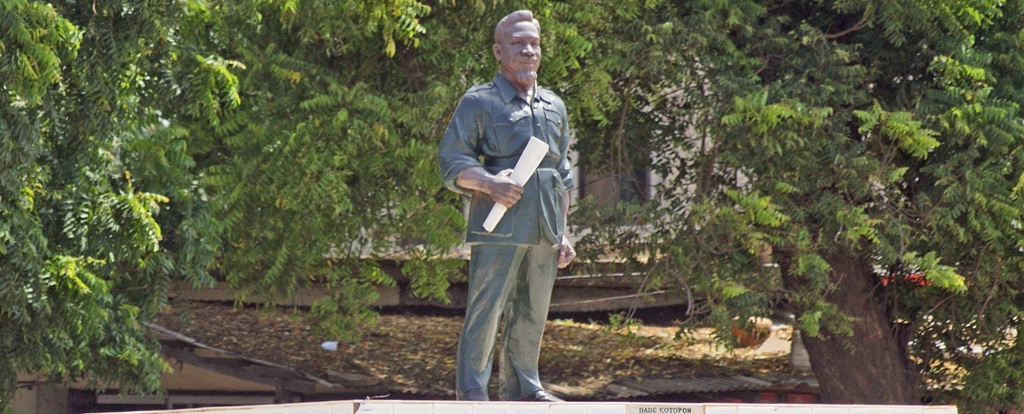
Commemorate Sgt. Adjetey, a pivotal figure in Ghanas independence, remembered every February 28 for his brave sacrifice.

Commemorate Sgt. Adjetey, a pivotal figure in Ghanas independence, remembered every February 28 for his brave sacrifice.

12 March 1948

(Gold Coast) — 12 March 1948 — Arrest of the “Big Six”  Kwame Nkrumah, J.B. Danquah, Ako Adjei, Edward Akufo‑Addo, William Ofori Atta, and Obetsebi Lamptey were arrested for “inciting” the riots. Their detention transformed them into national symbols of resistance.

January 1950

(Gold Coast) — January 1950 — Positive Action Campaign Begins  Nkrumah launched a nationwide campaign of strikes and civil disobedience demanding immediate self‑government. The colonial administration responded with mass arrests.

21 January 1950

(Gold Coast) — 21 January 1950 — Nkrumah Imprisoned at Ussher Fort  Kwame Nkrumah was sentenced to prison at Ussher Fort for leading the Positive Action movement. His imprisonment strengthened his popularity and the CPP’s momentum.- Explore Ussher Fort, where Kwame Nkrumahs  imprisonment sparked a revolution.

8 February 1951

 (Gold Coast) — 8 February 1951 — CPP Wins Elections  The Convention People’s Party won a decisive victory in the first general elections under the new constitution, even while Nkrumah was still in prison.

12 February 1951

(Gold Coast, Accra) — 12 February 1951 — Nkrumah Released from Ussher Fort  Following the CPP victory, Nkrumah was freed and appointed Leader of Government Business — effectively Prime Minister of the Gold Coast.

27 July 1954

(Gold Coast)— 27 July 1954 — CPP Wins Second General Election  The CPP strengthened its mandate, enabling Nkrumah to accelerate constitutional reforms toward full independence.

9 May 1956

 (Gold Coast) — 9 May 1956 — Final Self‑Government Elections  The CPP won again, confirming Ghana’s readiness for independence. British Togoland voted to join the Gold Coast in a disputed UN‑supervised plebiscite.

6 March 1957

🇬🇭 Ghana — 6 March 1957 — Independence from the United Kingdom  Ghana became the first sub‑Saharan African nation to achieve independence, led by Kwame Nkrumah. The event reshaped African liberation movements across the continent.

5 March 1957

🇬🇭 Ghana — March 5, 1957 — National Museum of Ghana. The National Museum of Ghana officially opened its doors to the public just one day before the historic moment of the country's independence. This remarkable event marked not only the establishment of a cultural institution dedicated to preserving and promoting Ghana's rich heritage but also served as a symbol of the nation's newfound freedom and identity. The museum plays a vital role in showcasing the diverse history, traditions, and artistic expressions of the Ghanaian people, making it an essential destination for both locals and visitors alike.

1957–1960

🇬🇭 Ghana — 1957–1960 — Early Nation Building & Pan‑African Leadership  Nkrumah launched ambitious national programs: expanding education, establishing state industries, strengthening agriculture, and positioning Ghana as the center of African liberation movements. George Padmore became a key advisor, helping build the Bureau of African Affairs.

1 July 1960

🇬🇭 Ghana — 1 July 1960 — Ghana Becomes a Republic  A national referendum approved a republican constitution. Nkrumah became the first President of Ghana.

1960–1961

🇬🇭 Ghana — 1960–1961 — Arrival of W.E.B. Du Bois in Ghana  Invited by Nkrumah, African‑American scholar W.E.B. Du Bois moved to Ghana to work on the Encyclopedia Africana. He became a Ghanaian citizen and spent his final years contributing to Pan‑African intellectual life.

1961

🇬🇭 Ghana — 1961 — Akosombo Dam Construction Begins  The Volta River Project, one of Africa’s largest infrastructure undertakings, began. It aimed to power Ghana’s industrialization and create Lake Volta, the world’s largest man‑made lake by surface area.

1961–1965

🇬🇭 Ghana — 1961–1965 — Nkrumah’s Major National Projects  Nkrumah launched transformative national developments:

January 1965

🇬🇭 Ghana — January 1965 — Akosombo Dam Commissioned  The dam was officially opened, providing electricity for industry, mining, and national development. It remains one of Ghana’s most important national assets.

24 February 1966

🇬🇭 Ghana — 24 February 1966 — Coup Against Nkrumah  The National Liberation Council (NLC) overthrew Nkrumah, with support by CIA and British Intelligence Service, while he was on a peace mission to Hanoi. Ghana entered its first period of military rule, ending the First Republic.

1966–1969

🇬🇭 Ghana — 1966–1969 — NLC Military Government  The NLC reversed many of Nkrumah’s socialist policies, privatized state enterprises, and aligned Ghana more closely with Western governments.

1966–1972

🇬🇭 Ghana — 1966–1972 — Nkrumah in Exile & Co‑Presidency in Guinea  Nkrumah was welcomed in Conakry by President Ahmed Sékou Touré and declared Co‑President of Guinea. He continued writing, advocating Pan‑African unity, and influencing African politics from exile.

29 August 1969

🇬🇭 Ghana — 29 August 1969 — Busia Government Begins  The Progress Party won elections under the Second Republic. Busia pursued liberal economic reforms and attempted to stabilize Ghana’s finances.

13 January 1972

🇬🇭 Ghana — 13 January 1972 — Acheampong Coup  Colonel Ignatius Kutu Acheampong overthrew Busia, establishing the National Redemption Council. His era introduced the “Operation Feed Yourself” agricultural program.

27 April 1972

🇬🇭 Ghana — 27 April 1972 — Death of Kwame Nkrumah  Kwame Nkrumah died in Bucharest, Romania, while receiving medical treatment for cancer. His passing marked the end of one of Africa’s greatest liberation leaders.

1 May 1972

🇬🇭 Ghana — On 1 May 1972, a state funeral was held in Conakry, Guinea, in a significant tribute to the late Kwame Nkrumah. President Ahmed Sékou Touré organized this national event to honor Nkrumah's contributions and legacy, recognizing him as Co-President of Guinea. The funeral served not only as a somber acknowledgment of his passing but also as a celebration of his vital role in the pan-African movement and his enduring influence on the region's political landscape. This solemn occasion brought together dignitaries and citizens who gathered to pay their respects and reflect on the profound impact Nkrumah had on the ideals of unity and independence in Africa.

9 July 1972

🇬🇭 Ghana — 9 July 1972 — Nkrumah’s Body Returned to Ghana  Nkrumah’s remains were flown from Conakry to Accra.

10 July 1972

🇬🇭 Ghana — 10 July 1972 — On this significant date, Kwame Nkrumah, the first President of Ghana, was laid to rest in his hometown of Nkroful, located in the picturesque Western Region of Ghana. This burial site in Nkroful holds deep meaning, as it reflects Nkrumah's roots and enduring connection to the village where he spent his formative years. His memorial side in this serene and historic location serves as a poignant reminder of his contributions to the nation and the lasting legacy he left behind.

5 July 1978

🇬🇭 Ghana — 5 July 1978 — Akuffo Palace Coup  General Fred Akuffo replaced Acheampong in an internal military transition.

4 June 1979

🇬🇭 Ghana — On 4 June 1979, a significant turning point in the nation's history occurred when Flight Lieutenant Jerry John Rawlings spearheaded the Armed Forces Revolutionary Council (AFRC) coup. This uprising, led by Rawlings, marked a crucial moment in Ghana's political landscape, as it sought to address the issues of corruption and mismanagement that plagued the country at that time. Through this bold move, Rawlings aimed to bring about a transformative change in governance and restore integrity to the nation’s leadership.

24 September 1979

🇬🇭 Ghana — 24 September 1979 — The Limann Government Begins
On this significant date, Hilla Limann was inaugurated as the President of Ghana, marking the start of the Third Republic. His ascent to power represented a pivotal moment in the country’s political landscape, as he took on the responsibilities of leading the nation during a time of considerable change and aspirations for democratic governance.

31 December 1981

🇬🇭 Ghana — 31 December 1981 — The historic Rawlings PNDC Coup marked a significant turning point in the nation's political landscape. On this day, Jerry Rawlings successfully orchestrated a coup that resulted in the ousting of then-President Hilla Limann. Following this pivotal event, Rawlings went on to establish the Provisional National Defence Council (PNDC), which aimed to address the political unrest and economic challenges facing Ghana at the time. This coup set the stage for a new era in Ghanaian governance and leadership.

28 April 1992

🇬🇭 Ghana — 28 April 1992 — New Constitution Approved  
On this significant date, Ghana embraced a new democratic constitution following a national referendum that marked a pivotal moment in the country’s political landscape. The approval of this constitution not only symbolized a commitment to democracy but also established a framework for governance that reflects the aspirations of the Ghanaian people. This landmark decision paved the way for greater political participation and the protection of fundamental rights, laying the groundwork for a more robust democratic process in Ghana.

1 July 1992

🇬🇭 Ghana — On July 1, 1992, a significant event took place as the remains of Ghana's founding father, Kwame Nkrumah, were reburied at the Kwame Nkrumah Mausoleum located in Accra. This momentous occasion marked the official inauguration of this mausoleum, which serves as a lasting tribute to Nkrumah's enduring legacy and contributions to the nation's independence. The reburial ceremony was attended by numerous dignitaries and citizens, reflecting the deep respect and admiration the people of Ghana hold for their first president.

7 January 1993

🇬🇭 Ghana — 7 January 1993 — Fourth Republic Inaugurated  Rawlings was sworn in as the first President of the Fourth Republic.

December 2000

Ghana-Net.com was launched in December 2000 as the first dedicated tourism and information portal for Ghana, focused on promoting the country. One of its inaugural stories covered the election runoff between then-President Rawlings and NPP presidential candidate Kufuor. Funded by a German entrepreneur in collaboration with a Ghanaian partner, Ghana-Net.com is the oldest tourism portal in Ghana and has been continuously online since its inception.

7 January 2001

On January 7, 2001, in a significant moment for the nation, John Agyekum Kufuor was officially sworn in as the President of Ghana. This event marked the beginning of his leadership and set the stage for his policies and initiatives aimed at advancing the country’s development.

07. January 2005

🇬🇭 Ghana — 7 January 2005 — John Agyekum Kufuor was officially sworn in once again, continuing his vital role as President of Ghana. His leadership marked a significant period of development for the nation, as he focused on initiatives aimed at enhancing the well-being of the Ghanaian people and promoting economic growth.

7 January 2009

🇬🇭 Ghana — 7 January 2009 — John Atta Mills was sworn in as President. He faced criticism from his own party, the NDC, but was beloved by the people. During his tenure, he championed a better Ghana, democracy, and inclusivity while fiercely combating corruption. Even as the NPP constructed the presidential palace, Atta Mills chose not to move in, prioritizing the needs of ordinary citizens over government interests.

24 July 2012

🇬🇭 Ghana — 24 July 2012 — Passing of President Mills. 
President Mills died in office under circumstances that remain questionable. NDC officials transported Atta Mills in a pickup truck, without police escort, to the hospital after discovering him bleeding from his nose, apparently, in his office at Osu Castle. He passed away at Military Hospital. John Dramani Mahama was sworn in on the same day.

7 January 2013

🇬🇭 Ghana — 7 January 2013 — Mahama Sworn In: Mahama officially commenced his elected term following the NDC's victory in the December 2012 elections.

7 January 2017

🇬🇭 Ghana — 7 January 2017 — Nana Addo Dankwa Akufo-Addo was officially sworn in as the President of Ghana. Representing the New Patriotic Party (NPP), Akufo-Addo's inauguration marked a significant turning point in the nation’s political landscape. The opposing party, the National Democratic Congress (NDC), along with former President John Mahama, found themselves in a state of shock and disbelief. Despite their confident predictions and expectations of victory, the election results had taken them by surprise, underscoring the unpredictable nature of democratic elections in the country.

7 January 2019

🇬🇭 Ghana — 1 January 2019 — The Year of Return Begins. Ghana, under the leadership of Nana Addo, launched the Year of Return initiative, which has become one of the most successful initiatives for the nation.

7 December 2020

🇬🇭 Ghana — 7 December 2020 — General elections were held in Ghana, and on 9 December 2020, the Electoral Commission declared Nana Akufo-Addo the winner.

7 December 2020

🇬🇭 Ghana — 1 January 2020 — The transformative Beyond the Return initiative officially launched, marking a significant milestone in promoting tourism and cultural heritag ties between the African diaspora and Ghana by encouraging people of African descent around the world to reconnect with their roots and explore the rich history and vibrant culture of Ghana.

January 7, 2021

🇬🇭 Ghana — January 7, 2021 — Nana Addo Dankwa Akufo-Addo has officially been sworn in for his second term as President of Ghana. This significant political event marks the continuation of his leadership following a successful election campaign, where he secured a victory to lead the nation once again.

4 July 2023

🇬🇭 Ghana — January 7, 2021 — On July 4, 2023, the newly renovated Kwame Nkrumah Memorial Park officially reopened to the public. After an extensive renovation process aimed at enhancing the experience for visitors, the park now offers an even more enriching environment to celebrate the legacy of Ghana's founding father.

7 December 2024

🇬🇭 Ghana — 7 December 2024 — The highly anticipated general elections in Ghana were conducted this day, marking a significant moment in the country's democratic process. Citizens took to the polls to express their preferences and participate in shaping the future of their nation.
9 December 2024 — Following the conclusion of the election, the Electoral Commission has officially announced the certified results, bringing clarity and resolution to the electoral outcome.

January 7, 2025

🇬🇭 Ghana — January 7, 2025 — In a significant moment for the nation's political landscape, John Dramani Mahama has been sworn in once again as President of Ghana. A continuation of the Fourth Republic, showcasing the resilience of democratic governance in the country.

06. March 2026

🇬🇭 Ghana — 7 December 2020 — On this significant day, Ghana proudly celebrated its 69th Independence Day, marking nearly seven decades of freedom and self-governance. This momentous occasion served as a reminder of the country’s rich history and the strides it has made since gaining independence. Communities across Ghana came together to honor this important milestone, reflecting on both past achievements and the promising future ahead.


✈️ Come Home. Celebrate. Reconnect.


If you’ve been waiting for the right moment to return, this is it. If you’ve been longing for a deeper connection, this is your chance. If you’ve been dreaming of Ghana, Ghana@70 is calling your name.

Let March 2027 be the month you step back onto Ghanaian soil with pride, joy, and open arms waiting for you.

Ghana@70 — a celebration of freedom, unity, heritage, and the global Ghanaian family.  Welcome home.